Glovebox
In the car
Snowstorm, breakdown or a closed road – once the engine is off, the cabin loses heat fast. The bag waits in the glovebox until you need it.
Snow, breakdowns, winter tailbacks


A compact emergency bivy bag that holds in your own body heat – for the car, the emergency kit and the rucksack.
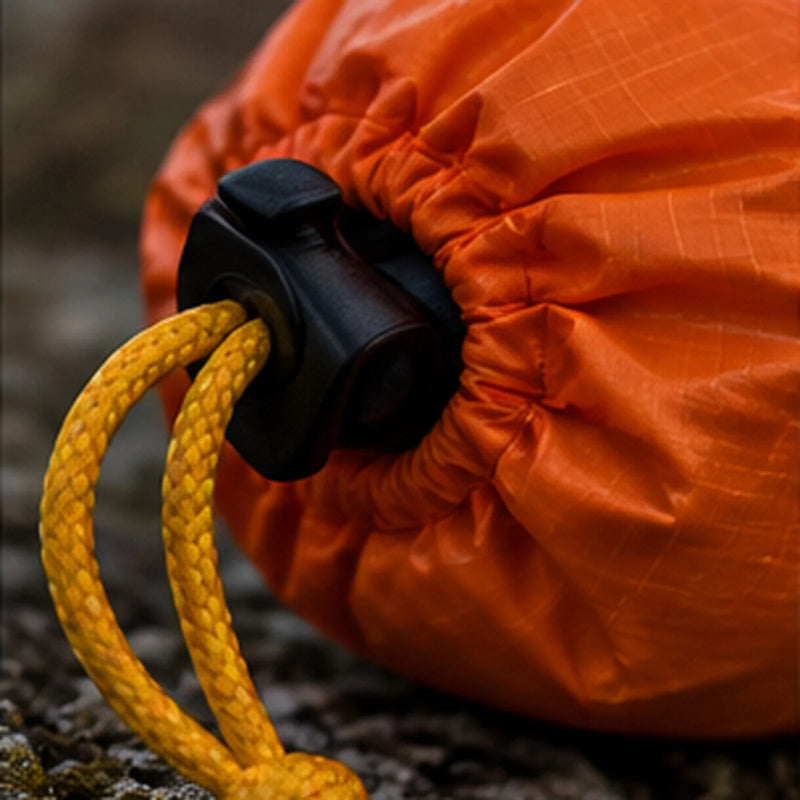
Orange stands out from a distance in a rescue. Green blends into woods and fields.
Bundle price applied automatically in your basket · Free delivery over £34.99
Pick a colour for each bag – mix as you like
Holds in your own body heat when you’re stuck in the cold.
A compact emergency bivy bag for the snowstorm on the road, the winter power cut or the walk that runs long. Climb in, close the bag and let the windproof, waterproof shell keep out wind and wet while the reflective inside sends back some of the heat you radiate. The size of a drinks can when packed – it waits in the glovebox, emergency kit or rucksack until you need it.
| Length | 210 cm |
|---|---|
| Width | 90 cm |
| Circumference | 180 cm |
| Packed size | 7 × 11 cm |
| Weight | 125 g |
| Material | BoPET (reflective polyester film) |
| Warmth | Retains up to 90% more body heat |
| Colours | Orange or green |
| Use | Car, home and outdoors |
| In the box | Bivy bag and storage pouch |
In the box: one emergency bivy bag and a compact storage pouch.
Material: BoPET, a thin, tough polyester film with a reflective surface. It keeps out wind and water and bounces back some of the heat your body radiates.
Always keep your head and face outside the bag and never cover the mouth. No piece of equipment guarantees survival in severe cold. Anyone showing signs of serious hypothermia needs emergency care – call 999.
Keep the bag away from open flames and heat sources. Not a toy: store out of reach of small children.
Free delivery on orders over £34.99. Your order is always dispatched within 48 hours from our warehouse, and you’ll get a tracking number as soon as your parcel is on its way.
30-day returns. Email support@eoka.se and we’ll refund 100% of your money as soon as the return is complete.
Where it earns its place
A normal sleeping bag stays at home. This one is the size of a drinks can – so it is where you are when something happens.
GloveboxSnowstorm, breakdown or a closed road – once the engine is off, the cabin loses heat fast. The bag waits in the glovebox until you need it.
Snow, breakdowns, winter tailbacks
 One each
In a long winter power cut the house gets colder by the day. Keep one per family member so everyone holds on to their warmth through the night.
Power cuts, cold homes, home preparedness
 Rucksack
On walks, fishing trips and stalking days where a sleeping bag is too bulky. Lighter than a sandwich and takes up almost no room.
Hillwalking, fishing, hunting, ski touring
Tip: keep one in every car and one per person in the emergency kit.
Why it works
One thin shell doing three jobs at once: stopping the wind, keeping out the wet and sending back some of the heat you radiate.
The reflective material cuts heat loss from moving air and evaporation – so the warmth stays closer to your body.
The size of a drinks can when packed. Fits the glovebox, the emergency kit or a rucksack’s side pocket.
A tough shell that can live in the car for years and fits an adult in full winter clothing.
Orange stands out from far away when people are searching for you. Green stays discreet in woods and fields.
The heat figure and material details come from the manufacturer. How warm you stay depends on your clothing, what you lie on, the wind and how long you are out.
 Water beads off
When it happens
Snow melting on your jacket, rain soaking in and wind cutting straight through your clothes – that is how the body loses heat fastest, whether you’re stuck on the road or sitting out the weather on the hill.
The bivy bag’s sealed shell lets neither water nor wind through. Drops bead off the outside while you stay dry inside.
Dry and out of the wind, you keep your warmth far longer.
 The warmth stays in
With the bivy bag
Climb in, pull the opening together and let the shell keep out the wind and wet. The reflective inside sends back some of the heat you radiate.
Put blankets or coats on top and something insulating underneath – that’s how you get the most from it.
Small in the glovebox. A big difference when it counts.
With and without
How waiting for help differs with and without a bivy bag around you.

| While you wait | With the bivy bag | Without |
|---|---|---|
| Wind on the body | Stopped by the shell | Pulls heat out of your clothes |
| Snow and rain | Waterproof shell | Clothes get soaked |
| Radiated body heat | Reflected back | Lost to the cold |
| Evaporation | Reduced | Keeps cooling you |
| Seen by rescuers | Orange stands out | |
| Heat loss over time | Slowed down | Grows by the hour |
| Space in the car | Fits in the glovebox | Blankets are at home |
No piece of equipment guarantees survival in severe cold. If someone shows signs of serious hypothermia, call the emergency services.
How to use it
The bag works best as part of a layered system – the same hypothermia-wrap principle rescue teams use when they package someone who is cold.
 Head always clear
Put blankets, a sleeping mat or seat cushions between your body and the ground or the car floor. Cold from below takes the most heat.
Change or wring out soaking-wet clothes first, if it is practical and safe. Wet clothing draws heat away.
Climb into the bag. It becomes your wind, water and vapour barrier next to your outer layers.
Lay blankets, coats or a normal sleeping bag over the bivy bag – not inside it.
Always keep your head and face outside. Never cover the mouth or nose.
No piece of equipment guarantees survival in severe cold. Anyone showing signs of serious hypothermia – uncontrolled shivering, confusion or shivering that stops – needs emergency care. Call 999.
 7 × 11 cm packed
Specification
Everything you need to know, no small print.
With our customers
In gloveboxes, emergency kits and rucksacks up and down the country.


Reviews

It lives in my day pack. The sun was out but the air was cold at the picnic spot, so I wrapped it round my shoulders while the flask went round. It weighs so little it comes on every walk.

I wanted to know how it works in the car before I ever need it, so I put the seat back and pulled the bag over me. It reaches up to my shoulders and now it stays in the car.

I drive a utility vehicle through the winter and wanted something small that can always stay in the cab. Sitting down, it covers me from the shoulders over my legs, so I can keep it on while I wait.

Before it went into the emergency kit I tried it on the garage floor: a blanket underneath and my head outside, just as the advice on the page says. Good to know how it feels and how to get in and out.

I rolled it out on the kitchen floor to check the size. It’s longer than I expected and I fit with room to spare. Hard to fold as neatly as it came, but it’s back in the emergency kit.
It barely takes up any space in the boot, so it went into the car’s emergency bag next to the jump leads and the ice scraper. I’d rather have it ready than need it and not have one.
I pack it as a spare when we camp in autumn. If plans change or the night turns colder than expected, there’s something extra to fall back on.
It got colder than the forecast on our walk and I was glad it was in my pack. Easy to carry as a back-up.
I wanted something that wouldn’t take up room in my rucksack. It fits in the lid pocket next to the first-aid kit and head torch.
We’re putting together a more complete emergency kit for the family and this was an easy thing to add. Four of them take up less room than a blanket.
I drive a lot between places and always keep basic emergency supplies in the car. It packs down small and is handy to have on board.
Lives in my fishing bag. When the wind picked up by the lake I pulled it over my legs while I sat and waited.
I chose green so it blends into the woods. It stays in my stalking pack with the flask and the sit mat.
I chose orange for the car because the colour is easy to spot if you need to be found. Easy to recognise in the emergency kit too.
We keep one at the cottage, where the power sometimes goes in storms. It’s in the cupboard with the torches and candles.
I keep one in the boat’s dry bag. It takes up almost no room and is good to have if you’re out longer than planned.
Bought two for my parents, who drive a lot on country roads in winter. They put them straight into the glovebox.
We got it out at home and practised so the kids know how to climb in and keep their heads out. Good to have done before it’s needed.
Used it the way the advice on the page says: a mat underneath, the bag around me and a blanket on top. Easy to see how the layers go.
When I went through the emergency kit this autumn, the pouch was intact and everything looked as it did when I bought it. It stays where it is.
I pack it in my rucksack on cross-country ski trips. It weighs so little I don’t notice it’s there.
I cycle to work all year and keep it in my pannier. Small enough to always fit.
The material rustles when you move and it’s hard to fold as neatly as it came. For what it’s for, that doesn’t matter.
I keep one in the work van and one in my own car. It fits in the door pocket and is easy to get out.
It lives in the storage box on the quad with spare gloves. Weighs next to nothing and takes almost no room, so it comes on every trip.
When the power went one evening in January we got the emergency kit out. The bag round my legs and a blanket on top on the sofa got us through until it came back.
I take the dog on long walks on the fells where the weather turns fast. It sits in my bum bag with the lead and treats.
Surprised how small it is packed. It sits in the glovebox next to the manual and there’s still room to spare.
My daughter passed her test this spring and I put an orange one in her car. Easy to explain what it’s for.
It’s an emergency shelter, not a sleeping bag for every night. The page says so clearly and that’s fair. As a backup it does exactly what it should.
I do long runs in the hills and wanted something for emergencies that weighs nothing. It fits in the back pocket of my running vest.
Sat by the water on a windy March day and pulled the bag up over my legs to keep the wind off. Much nicer to sit still with it.
Tried getting into it sitting in the car. Easy even with my winter coat on, and it came up to my shoulders.
As a Scout leader I keep four in the group’s emergency pack. Easy to hand out and the kids understand straight away how to use them.
I pack it with a spare layer for winter walks along the coast path. It takes up less room than my flask.
I went through a preparedness checklist and this was what was missing. Now there’s one per person in the kit in the cupboard.
Sat in the hide on a cold November morning with the green one round my legs. It blends into the woods and keeps the draught off.
It makes noise when you move, so don’t expect quiet. But it weighs almost nothing and takes no space, so I still keep one in the car.
The storage pouch means it doesn’t vanish among everything else in the car. Easy to recognise and grab.
Bought two before driving through the Highlands last winter. Good to know they were in the boot on the empty stretches.
Dad still drives between the cottage and town in winter. He got one for the car and one for the cottage and thought it was a thoughtful present.
It lives in the dry hatch of my kayak with a change of clothes. If you end up in the water you want something to wrap up in on shore.
Keep it under the seat on my motorbike. On long tours in the hills the evenings get cold, and it takes up no room at all.
We tested it with the kids in the woods: the orange one showed up between the trees from far away. That’s why we chose orange for the kit.
I drive lorries in the north of Scotland and keep it in the cab. If you’re stuck on a closed road on a winter night, you want it.
Never got it back as flat as it came, so I roll it up and push it into the pouch. Works fine, but don’t expect the factory fold.
Brought one on our family ski day. When we ate our packed lunch in the wind, my six-year-old wrapped up in it and wouldn’t give it back.
I work in the forest a long way from the nearest road. It sits in the cab of the machine in case something happens and I have to wait for help.
The four-pack covered the whole family. Two orange and two green, and the kids picked their own colour.
It’s been in the car through summer heat and winter cold. Took the pouch out to check and it looks just like when I put it in.
Questions & answers
Can’t find your answer? Email support@eoka.se and we’ll reply within a day.
The bag doesn’t heat you – it helps your body keep its own heat. According to the manufacturer it retains up to 90% more body heat by stopping wind and wet and reflecting back some of the heat you radiate. How warm you stay depends on your clothes, what you lie on and the weather.
Condensation can form, because your body gives off moisture and the shell is sealed. Avoid unnecessary effort in the bag, take off a layer if you’ve been sweating and open the bag briefly if moisture builds up.
It’s made for emergencies, not comfortable camping. It does most good as the wind and water barrier in a layered system: insulation underneath, the bag around you and blankets or a normal sleeping bag on top.
Orange is visible from far away and is the obvious choice for the car and the emergency kit, where you want to be found. Green is discreet and suits stalkers and anyone who wants to blend in. You can mix colours in the same pack.
Yes. Packed, it measures about 7 × 11 cm – the size of a drinks can – and weighs 125 g. It fits the glovebox, a door pocket, the emergency kit or the side pocket of a rucksack.
Yes, if you handle it with care. Let it dry, shake it out and roll it up loosely rather than folding it tightly. It will look a little crumpled after use but works just as well.
Yes, the material copes with both cold and heat in a parked car. It’s worth taking it out once a year when you check the car for winter and making sure the pouch is intact.
Yes, with an adult beside them. The head and face must always be outside the bag. It isn’t a toy – store it out of reach of small children.
Call 999. Move the person to shelter, insulate them from the ground, change wet clothes if it is safe to do so and wrap them in layers with the bivy bag next to their outer clothing. No equipment replaces medical care.
Orders are dispatched within 48 hours and you’ll get a tracking number straight away. Free delivery over £34.99. You have 30 days to return it – email support@eoka.se and we’ll help.